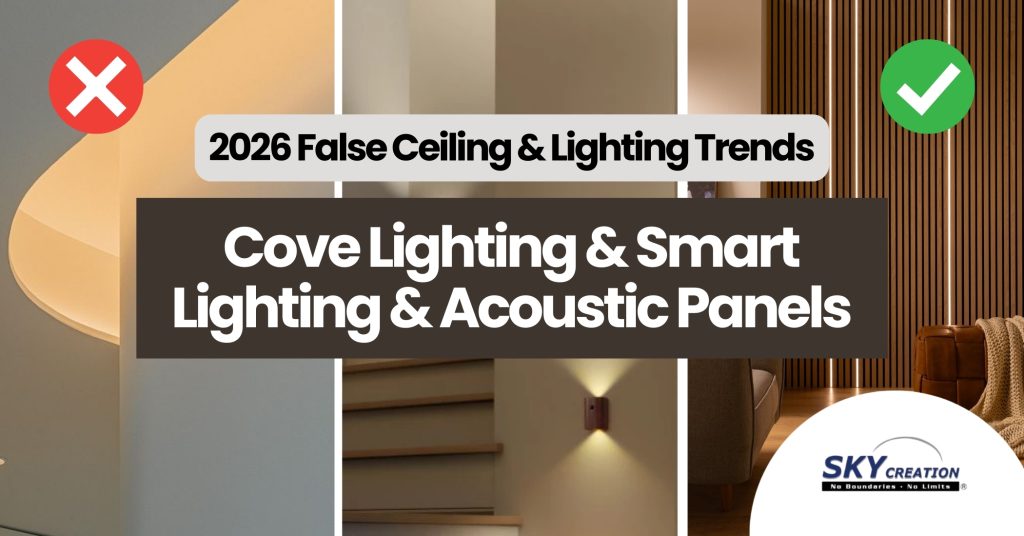
In 2026, homeowners are starting to realise something important:
A home can have beautiful carpentry, stylish furniture, and expensive materials — yet still feel uncomfortable if the ceiling and lighting are poorly designed.
Harsh lights, echoing spaces, low ceilings, and inflexible lighting setups are some of the most common renovation regrets today. This is why ceiling and lighting design has become one of the most talked-about renovation topics in 2026, especially for HDB flats, BTOs, and compact condominiums in Singapore.
Instead of decorative ceilings and excessive spotlights, modern homes are moving towards:
- Softer lighting
- Flexible control
- Better sound comfort
- Cleaner ceiling designs
Three elements now define this shift:
- Cove lighting
- Smart lighting systems
- Acoustic panels
Understanding how these work — and how to combine them properly — will help you design a home that looks calm, feels comfortable, and stays relevant for years.
Why Ceiling & Lighting Design Matters More Than Ever
Homes today are no longer single-purpose spaces. One room often needs to support:
- Daytime work
- Evening relaxation
- Family gatherings
- Quiet rest
Lighting that is too bright, too cold, or too fixed quickly becomes tiring. At the same time, many older false ceiling designs reduce ceiling height and make spaces feel boxed in — a big issue in Singapore homes where every centimetre matters.
In 2026, the goal is no longer to “show off” the ceiling, but to support daily living quietly and effectively.
The Move Away from Heavy False Ceilings
A clear trend in 2026 is what homeowners are avoiding.
Oversized false ceilings with:
- Multiple layers
- Decorative shapes
- Rows of downlights
are becoming less popular because they:
- Reduce ceiling height unnecessarily
- Increase renovation cost
- Create glare and harsh lighting
- Limit future flexibility
Instead, designers are using false ceilings only where they serve a purpose — mainly to house lighting, conceal wiring, or improve acoustics.
Cove Lighting: Soft Light That Changes the Mood
What Cove Lighting Actually Is
Cove lighting is indirect lighting hidden within ceiling recesses or ledges. The light does not shine directly into your eyes. Instead, it reflects gently off surfaces, creating a soft glow.
This makes a room feel:
- Warmer
- Calmer
- More spacious
Why Cove Lighting Is a Top Choice in 2026
Cove lighting works especially well in modern homes because it:
- Reduces glare
- Softens shadows
- Makes ceilings appear higher
- Creates ambience without visual clutter
It is commonly used in:
- Living rooms
- Bedrooms
- Dining areas
Rather than dominating the space, it quietly enhances it.
Common Cove Lighting Mistakes to Avoid
Even good ideas can go wrong if poorly executed.
Common mistakes include:
- Using overly cool (bluish) light tones
- Installing cove lighting that is too bright
- Using cove lighting everywhere without balance
In 2026, the best homes use cove lighting strategically, not excessively.
Smart Lighting: Lighting That Adapts to You
What Smart Lighting Means Today
Smart lighting in 2026 is no longer about gimmicks or complicated apps.
It is about:
- Adjusting brightness throughout the day
- Changing light warmth from day to night
- Creating different lighting moods easily
- Supporting work, rest, and sleep
Instead of one fixed lighting setup, homeowners enjoy multiple lighting scenes.
How Smart Lighting Is Used in Daily Life
Smart lighting allows homeowners to:
- Use brighter lighting for work or cooking
- Switch to warmer lighting for evenings
- Dim lights gradually before bedtime
- Control lights easily without effort
This flexibility is especially valuable in small homes where one space serves many functions.
Why Smart Lighting Works Best with Cove Lighting
When paired with cove lighting, smart controls allow:
- Gentle transitions instead of sudden brightness
- Subtle ambience changes throughout the day
- Better eye comfort
Together, they turn the ceiling into an active part of the living experience.
Acoustic Panels: The Comfort Factor Many Homes Miss
Why Sound Comfort Matters in Modern Homes
Modern interiors often feature:
- Hard flooring
- Minimal curtains
- Smooth walls
- Open layouts
While visually clean, these spaces can feel noisy or echoey.
Acoustic discomfort can lead to:
- Poor speech clarity
- Noise fatigue
- Reduced relaxation
In 2026, homeowners are paying more attention to how a home sounds, not just how it looks.
What Acoustic Panels Do
Acoustic panels help absorb sound reflections, making spaces feel:
- Quieter
- Calmer
- More comfortable
They are especially useful in:
- Living rooms
- Home offices
- Bedrooms
- Open-plan layouts
Modern acoustic panels are designed to blend in seamlessly with interiors.
Acoustic Panels as Part of the Design
Today’s acoustic solutions often appear as:
- Fluted wall panels
- Fabric-backed ceiling panels
- Timber acoustic features
They enhance both sound quality and visual warmth.
Comparison Table: 2026 Ceiling & Lighting Features at a Glance
| Feature | Main Purpose | Best Used In | Key Benefits | Common Mistakes |
|---|---|---|---|---|
| Cove Lighting | Create soft ambient light | Living rooms, bedrooms | Reduces glare, adds depth | Too bright, wrong colour tone |
| Smart Lighting | Adjust lighting moods | Whole home | Flexibility, eye comfort | Overcomplicated controls |
| Acoustic Panels | Improve sound comfort | Living rooms, offices | Less echo, calmer space | Poor placement, wrong material |
| Minimal False Ceiling | Support lighting & wiring | Selective areas only | Maintains ceiling height | Overuse without purpose |
How to Combine These Elements the Right Way
The most successful homes in 2026 plan ceiling and lighting together.
A balanced approach often includes:
- Minimal false ceiling where needed
- Cove lighting for ambience
- Downlights only for task areas
- Smart lighting for flexibility
- Acoustic panels in key zones
This creates a home that feels calm, adaptable, and timeless.
Where These Trends Work Best in the Home
Living Room
- Cove lighting for relaxation
- Smart lighting scenes for day and night
- Acoustic panels to reduce echo
Bedroom
- Warm indirect lighting
- Minimal ceiling disruption
- Acoustic comfort for better sleep
Home Office
- Adjustable brightness
- Acoustic panels for focus
- Reduced glare
Dining Area
- Balanced task and ambient lighting
- No harsh overhead lights
Each space benefits from a tailored approach.
What to Avoid in 2026
- Too many downlights causing glare
- Heavy decorative false ceilings
- One fixed lighting tone all day
- Ignoring sound comfort
- Copying showroom designs without adapting to your layout
Good lighting should feel natural — not noticeable.
Cost vs Long-Term Value
While these features may seem optional, they offer long-term benefits:
- Better daily comfort
- Reduced eye strain
- Improved sleep quality
- More flexible living spaces
Many homeowners find these investments more valuable than extra decorative carpentry.
Frequently Asked Questions
Is false ceiling still necessary in 2026?
Yes, but only where it serves a purpose such as lighting, wiring, or acoustics.
Can I achieve good lighting without full false ceiling?
Yes. Cove lighting and wall-based solutions reduce the need for extensive ceilings.
Is smart lighting difficult to use?
Modern systems are designed for simple daily use.
Do acoustic panels really make a difference?
Yes, especially in open or minimalist homes.
Is this suitable for HDB and BTO flats?
Absolutely. These trends are driven by compact urban living.
Designing a Home That Feels Right
In 2026, great homes are not the loudest or most dramatic ones.
They are homes where:
- Lighting feels gentle
- Sound feels calm
- Spaces adapt naturally to life
Ceiling and lighting design is no longer a finishing detail — it is a foundation of comfort.
Planning Your Renovation?
If you’re renovating and want a ceiling and lighting plan that balances beauty, comfort, and long-term flexibility:
👉 Get a Renovation Quote & Consultation
https://skycreation.com.sg/get-free-quote/
📲 WhatsApp Our Team
https://wa.me/6589567691