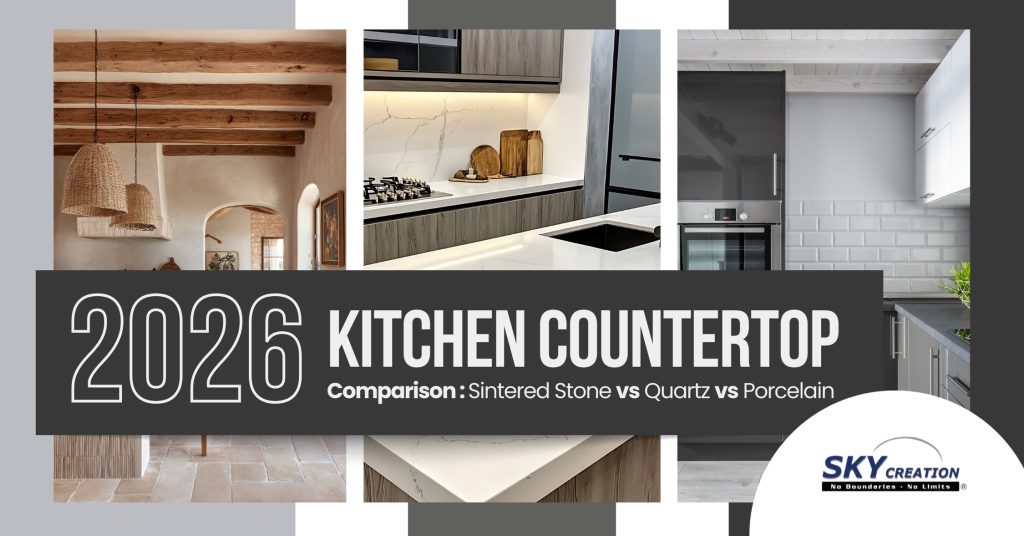
In 2026, the kitchen is no longer just a cooking space — it’s a daily work zone, social hub, and long-term investment.
And among all renovation decisions, kitchen countertop selection remains one of the most expensive mistakes homeowners make when chosen incorrectly.
In Singapore, where:
- Wok cooking is common
- Heat exposure is high
- Humidity is constant
- Kitchens are heavily used
Choosing the right countertop material is not about trends, but about performance, durability, and lifestyle fit.
This guide compares the three most popular kitchen countertop materials in 2026:
- Sintered Stone
- Quartz
- Porcelain
So you can choose with clarity — not regret.
What Makes a Good Kitchen Countertop in 2026?
Before comparing materials, let’s define what actually matters for Singapore kitchens.
Heat Resistance
Direct contact with hot pots, woks, and appliances is common. Some materials tolerate heat better than others.
Stain & Scratch Resistance
Daily spills, sauces, oils, and cutting activities test surface durability.
Hygiene & Food Safety
Non-porous surfaces are critical for preventing bacteria buildup.
Maintenance Requirements
Not every homeowner wants a high-maintenance countertop.
Long-Term Durability
A countertop should survive years, not just look good on day one.
What Is Sintered Stone?
How Sintered Stone Is Made
Sintered stone is manufactured using extreme heat and pressure, mimicking natural stone formation. It uses:
- Natural minerals
- No resins
- No artificial binders
Key Performance Strengths
- Extremely heat resistant
- Highly scratch resistant
- UV stable (won’t fade)
- Non-porous and hygienic
Common Misconceptions
- ❌ “It’s the same as porcelain”
- ❌ “It’s fragile”
In reality, sintered stone is one of the strongest engineered surfaces available — but installation quality matters.
What Is Quartz?
Composition & Manufacturing
Quartz countertops are made from:
- Natural quartz crystals
- Mixed with resins and pigments
Why Quartz Is Still Popular
- Consistent appearance
- Wide colour options
- Smooth, modern look
- Proven reliability
Limitations Homeowners Should Know
- Resin content means lower heat resistance
- Direct hot pot contact can cause scorch marks
- Not UV resistant (can fade near windows)
Quartz remains popular — but its limitations are more obvious in 2026.
What Is Porcelain Countertop?
How Porcelain Differs from Tiles
Porcelain countertops use large-format porcelain slabs, not typical wall or floor tiles.
Performance Characteristics
- Heat resistant
- Stain resistant
- UV stable
- Thin but strong
Why Porcelain Is Rising in 2026
- Lightweight compared to stone
- Ultra-thin profiles
- Clean, modern aesthetic
However, edge detailing and installation precision are critical.
Sintered Stone vs Quartz vs Porcelain (Side-by-Side Comparison)
| Feature | Sintered Stone | Quartz | Porcelain |
|---|---|---|---|
| Heat Resistance | Excellent | Moderate | Excellent |
| Scratch Resistance | Excellent | Good | Good |
| Stain Resistance | Excellent | Excellent | Excellent |
| UV Resistance | Yes | No | Yes |
| Porosity | Non-porous | Non-porous | Non-porous |
| Thickness Options | Medium–Thick | Thick | Ultra-Thin |
| Edge Durability | Very High | High | Moderate |
| Maintenance | Low | Low | Low |
| Installation Skill Needed | Very High | Medium | Very High |
Performance in Singapore Kitchens
Heat from Wok Cooking
- Best: Sintered Stone, Porcelain
- Caution: Quartz (avoid direct heat)
Humidity & Moisture Exposure
All three perform well, but quartz relies on resin stability over time.
Heavy Daily Usage
Sintered stone handles impact and wear best for high-usage households.
Cost Comparison in Singapore (2026)
| Material | Estimated Cost (SGD / ft²) | Notes |
|---|---|---|
| Sintered Stone | $120 – $180 | Premium performance |
| Quartz | $70 – $120 | Balanced cost |
| Porcelain | $90 – $150 | Installation-dependent |
Prices vary based on brand, thickness, edge detailing, and installation complexity.
Which Countertop Is Best for HDB Kitchens?
Sintered Stone
Best for:
- Heavy cooking households
- Long-term homeowners
- Premium renovation budgets
Quartz
Best for:
- Budget-conscious homeowners
- Light to moderate cooking
- Clean, modern aesthetics
Porcelain
Best for:
- Design-focused kitchens
- Thin, minimalist profiles
- Controlled installation environments
Which Countertop Should You Choose?
Choose Sintered Stone If You:
- Cook frequently with high heat
- Want maximum durability
- Prefer low-maintenance longevity
Choose Quartz If You:
- Want cost efficiency
- Cook moderately
- Prefer colour consistency
Choose Porcelain If You:
- Want sleek, thin aesthetics
- Value heat resistance
- Have experienced installers
Common Mistakes When Choosing Kitchen Countertops
Choosing by Looks Only
What looks good may not survive real cooking habits.
Ignoring Cooking Style
Wok cooking and baking require different surface performance.
Underestimating Installation Quality
Even the best material fails with poor workmanship.
Final Thoughts: The “Best” Countertop Depends on Lifestyle
In 2026, there is no single “best” kitchen countertop — only the right one for your lifestyle.
A good countertop should:
- Support how you cook
- Match how you live
- Last through years of daily use
Choosing correctly means fewer repairs, lower maintenance, and better long-term value.
Frequently Asked Questions (FAQ)
Q: Which kitchen countertop is best in Singapore?
A: The best countertop depends on cooking habits, budget, and durability needs. Sintered stone offers the highest performance.
Q: Is sintered stone better than quartz?
A: Sintered stone is more heat and scratch resistant, while quartz is more affordable and visually consistent.
Q: Is porcelain countertop durable for kitchens?
A: Yes, porcelain is durable and heat resistant but requires precise installation.
Q: Which countertop is most heat-resistant?
A: Sintered stone and porcelain are the most heat-resistant options.
Q: Which countertop stains the least?
A: All three are non-porous, but sintered stone and porcelain have the highest stain resistance.
Q: Is quartz still worth it in 2026?
A: Yes, for homeowners who cook moderately and want cost efficiency.
Q: Are porcelain countertops fragile?
A: Porcelain is strong but can chip at edges if poorly installed.
Q: Which countertop is easiest to maintain?
A: All three are low-maintenance, with sintered stone being the most forgiving.
Q: Which countertop gives best value for money?
A: Quartz offers the best balance of cost and performance for many households.
Q: Which countertop is best for resale value?
A: Sintered stone and quartz are most widely accepted in resale markets.