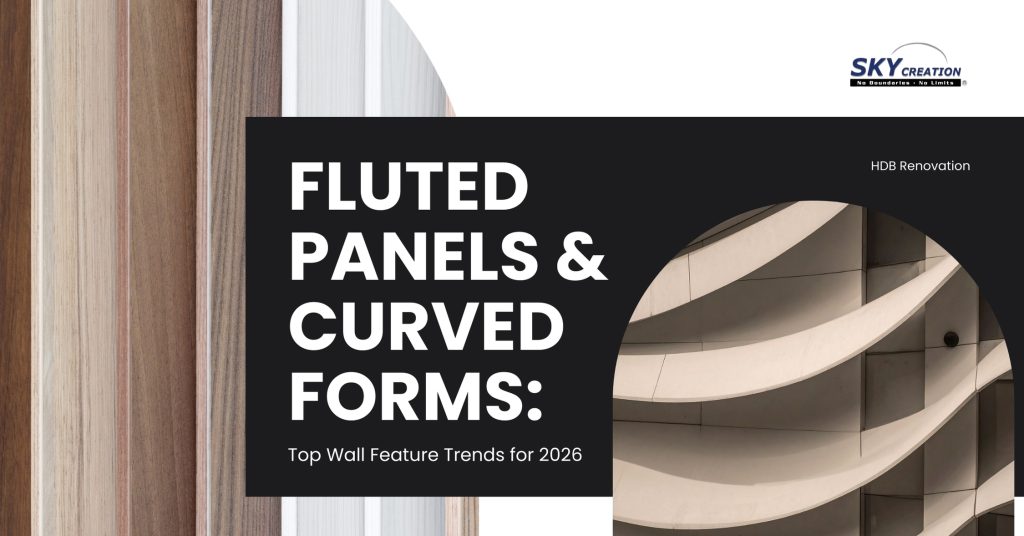
In 2026, interior design is moving away from flat, purely decorative walls. Instead, walls are becoming architectural elements that shape how a space feels, flows, and functions.
Two design languages are leading this shift across Singapore homes:
- Fluted panels — adding rhythm, texture, and vertical elegance
- Curved forms — softening spaces and replacing harsh lines
Together, they define the next generation of feature walls that feel modern without being loud, expressive without being excessive.
Why Feature Walls Matter More in 2026
In compact urban homes, every visual decision matters. Feature walls in 2026 are no longer about bold colours or heavy patterns — they are about depth, proportion, and subtle movement.
From Decoration to Architecture
Feature walls are now integrated into space planning, not added at the end. They guide sightlines, frame furniture, and define zones.
Visual Zoning Without Physical Walls
Fluted textures and curves allow designers to separate spaces without blocking light or airflow — especially important in HDB layouts.
Adding Depth Without Clutter
Instead of shelves or excessive décor, texture itself becomes the visual interest.
Fluted Panels: The Texture Trend That Keeps Evolving
What Are Fluted Panels?
Fluted panels feature repeating vertical or curved grooves, creating shadows and rhythm across a surface. They add texture while remaining visually calm.
Why Fluted Panels Are Still Relevant in 2026
Rather than disappearing, fluted panels have matured:
- Cleaner proportions
- Softer profiles
- More neutral colour palettes
- Better integration with lighting
They are no longer a “trend piece” but a design staple.
Common Types of Fluted Panels
- Wood veneer fluted panels
- Laminate fluted panels
- MDF fluted panels (painted)
- PVC fluted panels (low maintenance)
Where Fluted Panels Work Best
- TV feature walls
- Bedroom headboards
- Entryway statement walls
- Dining or study backdrops
Curved Forms: Softening Modern Interiors
Why Curves Are Back
After years of sharp, boxy minimalism, homeowners are craving spaces that feel more human and calming. Curves reintroduce flow and softness.
Curved Walls vs Curved Carpentry
- Curved walls: Architectural, sculptural, seamless
- Curved carpentry: Practical, flexible, easier to integrate
Both are used strategically depending on budget and space.
Psychological Impact of Curves
Curves naturally:
- Reduce visual tension
- Create a sense of movement
- Feel more welcoming and premium
This is why curved forms are often seen in luxury hotels and high-end residences — and now, thoughtfully adapted for HDBs.
Best Places to Use Fluted Panels & Curved Forms
TV Feature Walls
Fluted panels add texture without competing with the TV screen. Curved backdrops soften the focal point.
Bedroom Headboards
Vertical fluting elongates walls and creates a hotel-like feel.
Entryway / Foyer
Curved feature walls create a gentle transition from outside to inside.
Living–Dining Transitions
Fluted or curved elements visually separate spaces while keeping openness.
Study & Workspace Walls
Texture adds interest without visual noise, improving focus.
Check out our projects: Designed by Sky Creation
Fluted Panels vs Flat Panels vs Paint
| Feature | Fluted Panels | Flat Panels | Paint Finish |
|---|---|---|---|
| Visual Depth | High | Medium | Low |
| Timelessness | High (neutral tones) | High | Medium |
| Maintenance | Medium | Low | Low |
| Cost | Medium | Low–Medium | Low |
| Design Impact | Strong | Subtle | Minimal |
Design insight:
Fluted panels and curves replace decoration with form, which ages better over time.
Cost Guide for Feature Walls in Singapore (2026)
| Feature Type | Estimated Cost (SGD) | Notes |
|---|---|---|
| Fluted panel feature wall | $2,500 – $6,000 | Depends on material & size |
| Curved carpentry feature | $3,500 – $7,500 | Custom fabrication |
| Curved wall construction | $5,000 – $12,000 | Structural & finishing involved |
| Lighting integration | $800 – $2,000 | LED profiles & wiring |
Costs vary based on complexity, material choice, and workmanship.
Practical Considerations Before Adding Feature Walls
Maintenance & Dust
Fluted panels require occasional dusting but are manageable with modern finishes.
Lighting Integration
Indirect lighting enhances texture and prevents heavy shadows.
Space Constraints
In small HDB spaces, proportion matters more than size — over-designing can overwhelm.
Budget vs Impact
One well-designed feature wall is more effective than multiple competing elements.
How to Design Feature Walls That Won’t Look Dated
- Stick to neutral palettes (warm white, beige, soft grey, wood tones)
- Avoid overly deep grooves or dramatic patterns
- Pair textures with simple furniture forms
- Use curves selectively — not everywhere
- Know when not to add a feature wall
Restraint is what keeps designs timeless.
Are Fluted Panels & Curved Walls Suitable for HDB Flats?
Yes — when designed properly.
Key HDB Considerations
- Space proportion and clearance
- Fire safety and carpentry regulations
- Avoiding excessive build-ups
Curves and fluted panels are often best executed as carpentry features, not structural walls, in HDBs.
Final Thoughts: Why These Trends Define 2026 Interiors
Fluted panels and curved forms reflect a larger shift in interior design — away from surface-level trends and toward spatial quality and emotional comfort.
In 2026, the most beautiful homes aren’t the loudest.
They are the ones that feel calm, intentional, and quietly sophisticated.
Frequently Asked Questions (FAQ)
Q: Are fluted panels still trendy in 2026?
A: Yes. Fluted panels have evolved into a timeless texture and remain relevant when designed with neutral tones and clean proportions.
Q: Do fluted panels collect dust?
A: Light dust can collect in grooves, but regular wiping or vacuuming keeps them clean.
Q: Are curved walls suitable for HDB flats?
A: Yes. Curved forms are commonly executed through carpentry and are suitable for HDB flats when space is planned properly.
Q: Which rooms are best for fluted panels?
A: Living rooms, bedrooms, entryways, and study areas are ideal for fluted panels.
Q: Are curved feature walls expensive?
A: Curved features generally cost more than flat walls due to custom fabrication and workmanship.
Q: Fluted panels vs flat panels: which is better?
A: Fluted panels add more visual depth, while flat panels offer a cleaner, more minimal look.
Q: How do you clean and maintain fluted panels?
A: Use a soft cloth, vacuum with a brush attachment, or mild cleaners depending on the material.
Q: Can curved forms make small spaces look bigger?
A: Yes. Gentle curves improve visual flow and reduce harsh lines, making spaces feel more open.
Q: Will feature walls make my home look dated?
A: Not if designed with restraint, neutral colours, and timeless proportions.
Q: Are feature walls worth the cost?
A: Yes. A well-designed feature wall can elevate the entire space with minimal renovation scope.