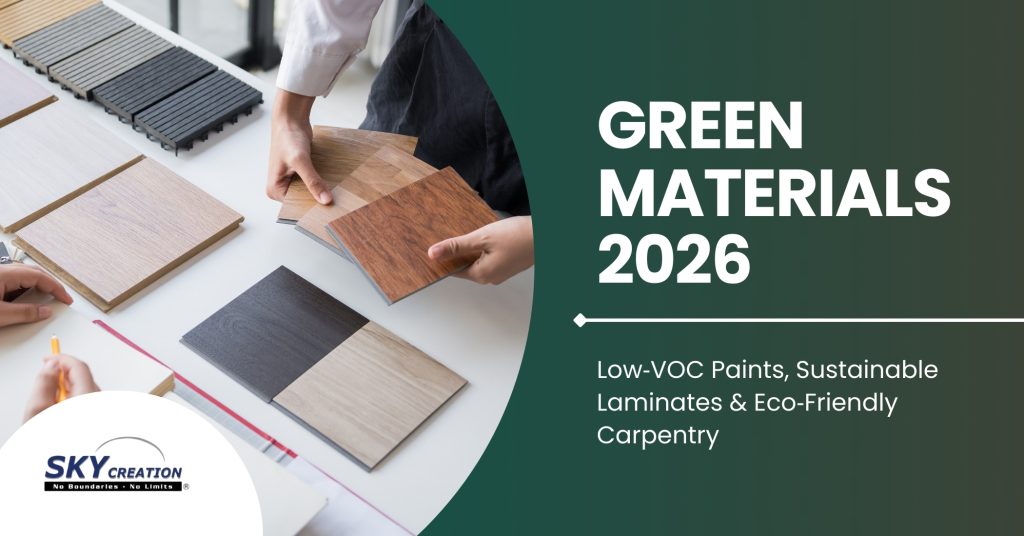
Green renovation materials are no longer a niche topic in Singapore. By 2026, many homeowners are actively asking about low-VOC paints, sustainable laminates, and eco-friendly carpentry — not because it is trendy, but because they are concerned about health, long-term comfort, and maintenance.
At the same time, confusion is common.
Homeowners often say:
- “Is this really safer, or just marketing?”
- “Why is the eco option more expensive?”
- “Will it last as long as normal materials?”
- “How do I know what actually matters?”
This article is written to answer those questions clearly, without technical jargon or sales language. The goal is to help Singapore homeowners make informed material choices that improve daily living — not just tick a green box.
Why Green Materials Matter More in 2026 Homes
In Singapore, most families spend a large portion of their time indoors. Air-conditioning is used frequently, windows are often closed, and interior air circulation is limited.
This means that:
- Materials used inside the home directly affect indoor air quality
- Odours, chemical emissions, and dust linger longer
- Sensitive groups such as children and elderly are more affected
Green materials are less about environmental slogans and more about reducing unnecessary exposure inside your own home.
Understanding What “Green” Really Means in Renovation
Many homeowners assume “green” automatically means:
- Natural
- Completely chemical-free
- Environmentally perfect
In reality, green renovation materials focus on:
- Lower harmful emissions
- Responsible sourcing
- Safer long-term indoor use
- Reduced environmental impact compared to conventional alternatives
The key word is “reduced”, not “eliminated”.
Low-VOC Paints: What Homeowners Should Know
What Is VOC and Why It Matters
VOC refers to compounds released into the air as paint dries and ages. In enclosed homes, these emissions can cause:
- Strong lingering smells
- Headaches or discomfort
- Irritation for children or elderly
Low-VOC paints significantly reduce these emissions.
What Homeowners Commonly Misunderstand
Many believe low-VOC paint:
- Has poor colour quality
- Is less durable
- Peels faster
In 2026, this is no longer accurate. Modern low-VOC paints offer:
- Stable colour performance
- Comparable durability
- Easier maintenance
The real difference is not visual — it is how the home feels after painting is completed.
Sustainable Laminates: Beyond Surface Appearance
Laminates are widely used in Singapore homes for wardrobes, cabinets, and storage systems.
Why Conventional Laminates Can Be a Problem
Traditional laminates may:
- Emit stronger chemical smells
- Contain higher levels of bonding agents
- Trap odours inside enclosed spaces
This is especially noticeable in bedrooms and kitchens.
What Makes a Laminate More Sustainable
Sustainable laminates focus on:
- Lower emission bonding materials
- Responsible manufacturing processes
- Better long-term indoor air performance
For homeowners, the benefit is subtle but important: the home smells neutral faster, and remains more comfortable over time.
Eco-Friendly Carpentry: What It Actually Means
Eco-friendly carpentry is often misunderstood as simply “using wood”.
In reality, it refers to:
- The type of board used
- The adhesives involved
- The finishing process
- The durability and lifespan of the carpentry
Why Board Selection Matters
Not all boards behave the same over time. Some may:
- Warp in humidity
- Release stronger odours
- Degrade faster
Eco-conscious carpentry focuses on stable, lower-emission boards that are better suited to Singapore’s climate.
Common Myths About Green Renovation Materials
Myth 1: Green materials are only for luxury homes
In reality, many eco options are now mainstream and accessible.
Myth 2: Green means fragile
Durability depends on correct material selection, not whether it is eco-labelled.
Myth 3: You must choose green for everything
Targeted choices often deliver better value than trying to change every material.
Where Green Choices Make the Biggest Difference
Not all areas of the home have the same impact.
Green materials matter most in:
- Bedrooms
- Children’s rooms
- Kitchens
- Enclosed storage areas
These spaces have higher exposure and lower ventilation, making material emissions more noticeable.
Cost Considerations: What Homeowners Should Expect
Green renovation materials are often slightly more expensive upfront, but cost should be viewed over time.
Homeowners often save through:
- Reduced need for repainting
- Lower maintenance
- Better durability
- Improved comfort without additional equipment
The real value is long-term livability, not short-term savings.
Common Green Material Mistakes — And How to Avoid Them
| Problem / Feature | Why It Happens | Common Regret | How to Avoid |
|---|---|---|---|
| Choosing labels blindly | Relying on marketing terms | Paying more without benefit | Understand material purpose |
| Mixing incompatible materials | No overall plan | Uneven performance | Plan material use holistically |
| Over-prioritising cost | Budget pressure | Lingering odours | Prioritise key areas |
| Ignoring climate | Imported standards | Warping or mould | Choose climate-suitable materials |
| Expecting instant results | Misunderstanding emissions | Disappointment | Allow proper curing time |
These issues are common and preventable with proper guidance.
How Regulations and Standards Influence Green Choices
Singapore places increasing emphasis on health, safety, and sustainability in residential environments. While homeowners may not interact directly with all regulations, these standards influence what materials are available and recommended.
You can find general guidance on residential living standards in Singapore at:
https://www.hdb.gov.sg/residential/living-in-an-hdb-flat
Although focused on HDB living, the underlying principles of safety and well-being apply across all home types.
Planning Green Choices Without Overcomplicating Renovation
A common fear is that choosing green materials makes renovation complicated.
In practice:
- You do not need to change everything
- Strategic choices deliver most benefits
- Clear guidance simplifies decisions
Green renovation is about thoughtful selection, not perfection.
Frequently Asked Questions
Do green renovation materials really improve indoor air quality?
Yes, especially in enclosed and frequently used spaces like bedrooms and kitchens.
Are low-VOC paints safe for children?
They significantly reduce exposure risks compared to conventional paints.
Will eco-friendly carpentry last as long?
When correctly specified, durability is comparable or better.
Is green renovation suitable for all budgets?
Yes, by prioritising key areas rather than changing everything.
Can green materials reduce long-term maintenance?
In many cases, yes, due to better stability and finish quality.
Getting Professional Guidance on Green Renovation Choices
If you are planning a renovation and want clarity on which green materials genuinely matter for your home, professional guidance can help you avoid unnecessary costs and confusion.
You may explore how sustainable renovation planning is approached here:
https://skycreation.com.sg/
For personalised advice, you can request a consultation at:
https://skycreation.com.sg/get-free-quote/
If you prefer a direct discussion, you can also reach out via WhatsApp:
https://wa.me/6589567691
Choosing Green Is About Living Better, Not Following Trends
Green renovation materials are not about being fashionable. They are about creating a home that feels healthier, calmer, and more comfortable over time.
In 2026, the most successful renovations are not the ones that look the most impressive on day one, but the ones that continue to feel good to live in years later.
Making informed material choices today is one of the simplest ways to protect your home environment for the long term.