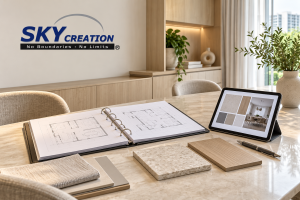

An interior designer plans how your space looks and functions and produces concepts, layouts, and material choices. A renovation contractor carries out the physical work: demolition, carpentry, tiling, plumbing, electrical, and finishing. In Singapore, many firms offer only design or only contracting; others combine both under one roof so you get a single point of contact from concept to handover.
What an Interior Designer Does
An interior designer focuses on how your home looks, feels, and works. They help you decide layout, colour, materials, furniture placement, and lighting so the result matches your lifestyle and budget.
Typical tasks include:
- Space planning and floor layout
- 3D visuals or mood boards so you can picture the result
- Choosing finishes, tiles, laminates, and paint colours
- Specifying built-in carpentry (e.g. wardrobes, kitchen cabinets) and how they should look
- Coordinating with you on style and preferences
Designers usually do not do the actual construction. They produce drawings and specifications that a contractor then executes. If you hire only a designer, you (or the designer) still need to find and manage a contractor.
What a Renovation Contractor Does
A renovation contractor is the party that does the building work. They take approved plans and carry out demolition, structural changes, wet works, electrical, plumbing, carpentry, and finishing on site.
Typical tasks include:
- Demolition and disposal
- Masonry, tiling, and waterproofing
- Electrical and plumbing
- Ceiling and partition works
- Carpentry installation (often from subcontracted or in-house workshops)
- Painting and final touches
Contractors work from drawings and specs. If those are unclear or change often, you can get delays, extra cost, or results that don’t match what you had in mind. A contractor who only builds does not usually offer full design; you bring the design from elsewhere or keep it simple.
Interior Designer vs Renovation Contractor: Side-by-Side
| Aspect | Interior designer | Renovation contractor |
|---|---|---|
| Main role | Plans layout, look, and feel; produces design and material specs | Executes construction and installation on site |
| Deliverables | Floor plans, 3D views, material boards, furniture layout | Completed works: tiling, carpentry, M&E, painting, etc. |
| Who manages site | May supervise or coordinate; often not on site daily | On site; manages workers and schedule |
| Best for | Homeowners who want a clear design first and may hire build separately | Homeowners who already have plans or want straightforward build-only |
| Typical risk | Design and build split between two parties; coordination gaps | No single party responsible for both design and build quality |
Bottom line: A designer gives you the plan; a contractor turns it into reality. When they are separate, you or a project manager must keep them aligned. When one firm does both, one team is accountable for the whole outcome.
Which Option Fits HDB, Condo, or Landed Homes?
- HDB / BTO: Layout and space are tight; design choices affect daily life a lot. Many homeowners want both clear design and reliable build. A firm that does design and build together can reduce miscommunication and rework, and can align with HDB rules and renovation windows.
- Condo: Management rules, approved renovation periods, and noise limits matter. A single team that handles design and build can factor in these constraints from the start and coordinate with the management office.
- Landed: Scope is larger (multiple floors, possible structural or M&E work). Coordination between design and build becomes even more important. One accountable team for design and renovation can help keep timeline and quality under control.
So the “better” option is not designer vs contractor in the abstract; it depends on whether you want to manage two parties or have one team own the full journey.
When a One-Stop Design-and-Build Firm Makes Sense
A one-stop firm combines interior design and renovation under one company. You get one quotation, one project lead, and one point of contact from first sketch to handover.
This setup often works well when:
- You want design and build aligned so the result matches the plan.
- You prefer not to coordinate between a separate designer and contractor.
- You value transparent pricing and a single scope document that covers both design and construction.
- You expect clear milestones, sign-offs, and after-sales support (e.g. defect checks) from the same team.
In Singapore, some award-winning and professionally accredited firms offer this end-to-end service for BTO, HDB, condo, and landed projects, with itemised quotes and structured handover so you know what you are paying for and what you get at each stage.
Common Mistakes Homeowners Make When Choosing
- Picking the lowest quote without comparing scope. Cheap quotes often omit items or assume you will add later at higher rates. Compare what is included (design, carpentry, M&E, finishes) and payment milestones.
- Hiring a designer and contractor separately without a clear brief. If the designer’s drawings are vague, the contractor may interpret differently and you pay for changes. Lock in layout and key materials before build starts.
- Skipping written scope and variations. Agree in writing what is included and that any extra work is approved and quoted before it is done. That reduces “hidden cost” surprises.
- Ignoring after-sales. Renovation does not end at handover. Check whether the firm offers defect checks or post-handover support so small issues are fixed without extra hassle.
Coordination & accountability
Who coordinates changes, site decisions and handover?
The real homeowner decision is not only whether to hire an interior designer or a renovation contractor. It is also who coordinates drawings, site realities, material changes, variation approvals, handover notes and post-completion follow-up.
If you are comparing separate appointments against one integrated team, review how renovation project management in Singapore works, and clarify renovation warranty and after-sales support expectations before committing.
Frequently Asked Questions
What is the difference between an interior designer and a renovation contractor in Singapore?
An interior designer plans your space (layout, look, materials, and style) and produces drawings and specifications. A renovation contractor performs the physical works (demolition, tiling, carpentry, electrical, plumbing, painting). Designers focus on planning; contractors focus on building. Some Singapore firms do both under one roof so you get design and build from a single team.
Should I hire an interior designer or a contractor for my HDB renovation?
It depends on your needs. If you want a clear layout, style, and material plan first, you need design input (from an interior designer or a design-and-build firm). If you already have a fixed plan and only need execution, a contractor can do the work. For most HDB homeowners, a firm that offers both design and renovation in one package reduces coordination issues and keeps one party accountable for the final result.
Can one company do both interior design and renovation?
Yes. Many firms in Singapore offer full design-and-build services: they handle concept, drawings, material selection, and construction. You get one quotation, one project manager, and one team from start to handover. This can simplify communication, reduce gaps between design and build, and make pricing and scope easier to compare.
Why does choosing between an ID and a contractor matter for landed homes?
Landed projects usually involve more scope (multiple floors, more M&E and finishing). When design and build are split, changes and miscommunication can lead to delays and extra cost. A single team that does both can align design with build from the start and manage timeline and quality across the whole project.
Conclusion
The real difference between an interior designer and a renovation contractor is simple: one plans your space and look, the other builds it. In Singapore, you can hire them separately or choose a firm that does both. For many homeowners, especially those with HDB, condo, or landed projects, a single team that handles design and renovation gives clearer accountability, simpler coordination, and a single scope and quote to compare.
If you are deciding between separate appointments and one integrated team, speak with Sky Creation about your renovation scope, timeline, site constraints, coordination needs and handover expectations before you commit.
After-sales clarity
Compare the team model together with warranty and handover expectations
When deciding between an interior designer, contractor or integrated renovation team, also clarify how workmanship concerns, handover notes and after-sales support may be reviewed after completion.
Read renovation warranty and after-sales support guideEC renovation planning
Planning an executive condominium renovation?
Use Sky Creation’s EC renovation guide to clarify floor-plan planning, storage, handover checks, project coordination and premium finish direction before comparing proposals.
Read the executive condominium renovation guide