Interior design in 2026 is no longer about dramatic statements or picture-perfect homes made for social media.
Instead, homeowners are gravitating toward styles that feel calm, grounded, and emotionally comforting — spaces that support everyday living rather than impress visitors for a moment.
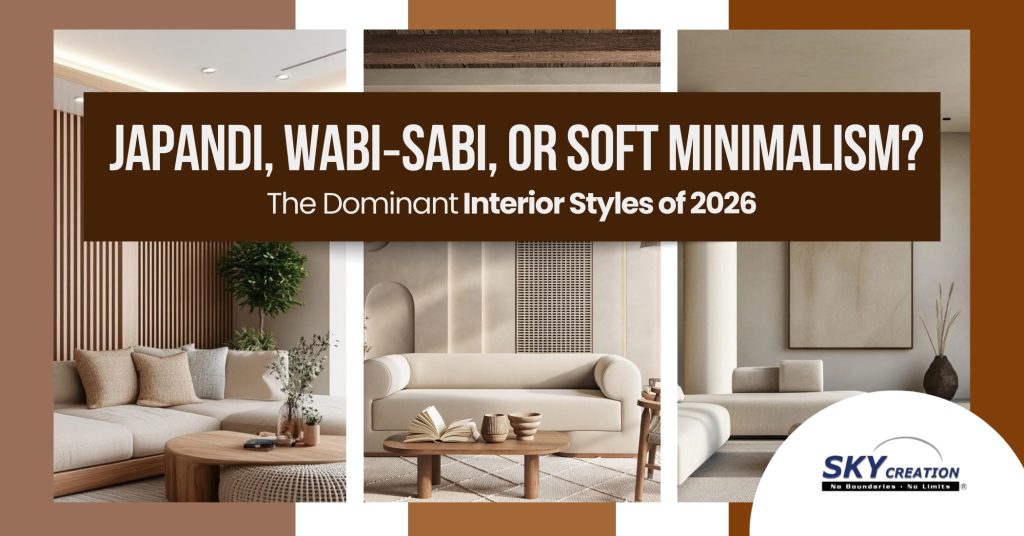
Among all the design directions shaping homes today, three styles stand out as the most dominant and requested in 2026:
- Japandi
- Wabi-Sabi
- Soft Minimalism
While they may look similar at first glance, each represents a very different philosophy and lifestyle approach. Understanding their differences is essential before choosing one for your home.
This guide breaks them down clearly, so you can decide which style truly fits your space, habits, and long-term comfort.
Why These Three Styles Are Dominating in 2026
The rise of Japandi, Wabi-Sabi, and Soft Minimalism reflects a deeper shift in how people view their homes.
In recent years, homeowners have experienced:
- Longer hours spent at home
- Increased mental and digital fatigue
- Smaller living spaces with higher expectations
- A desire for peace rather than stimulation
As a result, interior design is moving away from:
- Sharp contrasts
- Over-decorated spaces
- Trend-driven aesthetics
And toward:
- Natural materials
- Muted palettes
- Thoughtful simplicity
- Emotional well-being
These three styles answer that need in different ways.
Japandi: Balance Between Structure and Warmth
What Japandi Really Means
Japandi is a hybrid style that blends:
- Japanese minimalism (order, restraint, clarity)
- Scandinavian warmth (comfort, light, softness)
The result is a home that feels intentional but welcoming — clean without being cold.
Key Characteristics of Japandi Interiors
Japandi homes typically feature:
- Clean, simple lines
- Light to medium wood tones
- Neutral colour palettes with contrast
- Functional, well-crafted furniture
- Minimal but purposeful décor
Nothing is excessive, but nothing feels empty.
How Japandi Works in Singapore Homes
Japandi is particularly popular in:
- BTO flats
- Compact condos
- Homes that prioritise neatness and organisation
Its strengths include:
- Efficient space planning
- Strong storage integration
- Visual calm even in small layouts
However, Japandi requires discipline. Too many accessories or mismatched finishes can easily break the balance.
Who Japandi Is Best For
Japandi suits homeowners who:
- Prefer structured spaces
- Value order and cleanliness
- Want timeless design over trends
- Appreciate subtle contrasts and craftsmanship
It is ideal for those who like things to have a clear place and purpose.
Wabi-Sabi: Beauty in Imperfection
Understanding Wabi-Sabi Beyond the Aesthetic
Wabi-Sabi is often misunderstood as a “look.”
In truth, it is a philosophy — one that embraces:
- Imperfection
- Natural ageing
- Simplicity
- Authenticity
Rather than hiding flaws, Wabi-Sabi celebrates them.
Visual Elements of Wabi-Sabi Interiors
Wabi-Sabi spaces often include:
- Textured walls with natural finishes
- Uneven surfaces
- Earthy, muted tones
- Organic shapes
- Handmade or raw materials
The space feels quiet, grounded, and deeply personal.
How Wabi-Sabi Translates to Modern Homes
In 2026, Wabi-Sabi has evolved to suit modern living.
Instead of extreme rawness, contemporary Wabi-Sabi interiors balance:
- Natural textures with clean layouts
- Soft imperfections with functional design
- Calm emptiness with comfort
This makes it more practical for daily living in Singapore homes.
Who Wabi-Sabi Is Best For
Wabi-Sabi suits homeowners who:
- Appreciate natural materials
- Prefer emotional depth over visual perfection
- Are comfortable with patina and ageing
- Want a home that feels soulful, not staged
It is less about impressing others and more about personal connection.
Soft Minimalism: Comfort-First Simplicity
What Makes Soft Minimalism Different
Soft Minimalism evolved as a response to harsh minimalism.
Instead of cold whites and rigid emptiness, it focuses on:
- Gentle forms
- Warm neutrals
- Soft textures
- Comfort-driven layouts
The goal is not emptiness, but ease.
Defining Features of Soft Minimalist Homes
Soft minimalist interiors typically include:
- Rounded furniture edges
- Warm beige, cream, or taupe palettes
- Layered lighting
- Plush fabrics
- Simple but cosy layouts
Everything feels intentional, but nothing feels strict.
Why Soft Minimalism Is Growing Rapidly in 2026
This style resonates strongly with:
- Young families
- Work-from-home professionals
- Homeowners seeking emotional comfort
It adapts well to:
- Small spaces
- Multi-functional rooms
- Long-term living
Soft Minimalism is often the most forgiving of the three styles.
Who Soft Minimalism Is Best For
Soft Minimalism suits homeowners who:
- Want calm without rigidity
- Prefer comfort over visual drama
- Live actively in their homes
- Want flexibility as life changes
It is ideal for those who want simplicity without sacrifice.
Comparing the Three Styles Side by Side
| Aspect | Japandi | Wabi-Sabi | Soft Minimalism |
|---|---|---|---|
| Core Philosophy | Balance & function | Imperfection & authenticity | Comfort & calm |
| Visual Feel | Clean, warm, structured | Organic, raw, soulful | Soft, cosy, gentle |
| Maintenance | Moderate | Low | Moderate |
| Suitability for Small Homes | Very good | Good | Very good |
| Emotional Tone | Orderly & serene | Grounded & reflective | Relaxed & nurturing |
Choosing the Right Style for Your Home
Instead of asking, “Which style is trending?”
Ask yourself:
- Do I prefer order or organic freedom?
- Do I want my home to feel structured or relaxed?
- Am I comfortable with ageing materials?
- Do I want visual contrast or softness?
- How do I actually live day to day?
Your answers matter more than aesthetics.
Can These Styles Be Mixed?
Yes — carefully.
In 2026, many homes adopt hybrid approaches, such as:
- Japandi layouts with soft minimalist furniture
- Wabi-Sabi textures within a minimalist structure
- Soft minimalism as a base with Japandi accents
The key is consistency in:
- Colour palette
- Material selection
- Spatial logic
Mixing styles without a clear base often leads to confusion rather than harmony.
Common Mistakes When Choosing These Styles
- Choosing Wabi-Sabi without understanding maintenance expectations
- Applying Japandi too rigidly, making the home feel cold
- Over-softening minimalist spaces until they lose structure
- Copying online images without adapting to actual layouts
Good design is contextual, not copied.
Making These Styles Work Long-Term
The most successful 2026 interiors share common principles:
- Neutral, adaptable base palettes
- Durable materials
- Thoughtful lighting
- Layouts designed around routines
Styles should support life — not restrict it.
Frequently Asked Questions
Which style is the most timeless?
Japandi and Soft Minimalism are generally the most adaptable over time.
Is Wabi-Sabi practical for families?
Yes, if executed thoughtfully with durable materials and proper planning.
Do these styles work in HDB and BTO flats?
All three can work well when adapted to space constraints and lifestyle needs.
Which style requires the least upkeep?
Wabi-Sabi often hides wear better, while Soft Minimalism balances upkeep and comfort.
Can I change styles later?
Choosing a neutral base allows easier evolution over time.
Designing a Home That Feels Right in 2026
In 2026, the most important interior trend is emotional alignment.
Homes are no longer designed just to look good — they are designed to feel right.
Whether you choose:
- The balanced calm of Japandi
- The soulful depth of Wabi-Sabi
- Or the gentle comfort of Soft Minimalism
The best choice is the one that supports how you live, rest, and grow.
Planning Your Home’s Interior Style?
If you’re deciding between these styles and want guidance tailored to your layout, lifestyle, and budget, speaking with the right professionals early helps avoid costly missteps.
👉 Request a Renovation Consultation & Quote
https://skycreation.com.sg/get-free-quote/
📲 WhatsApp Our Design Team
https://wa.me/6589567691