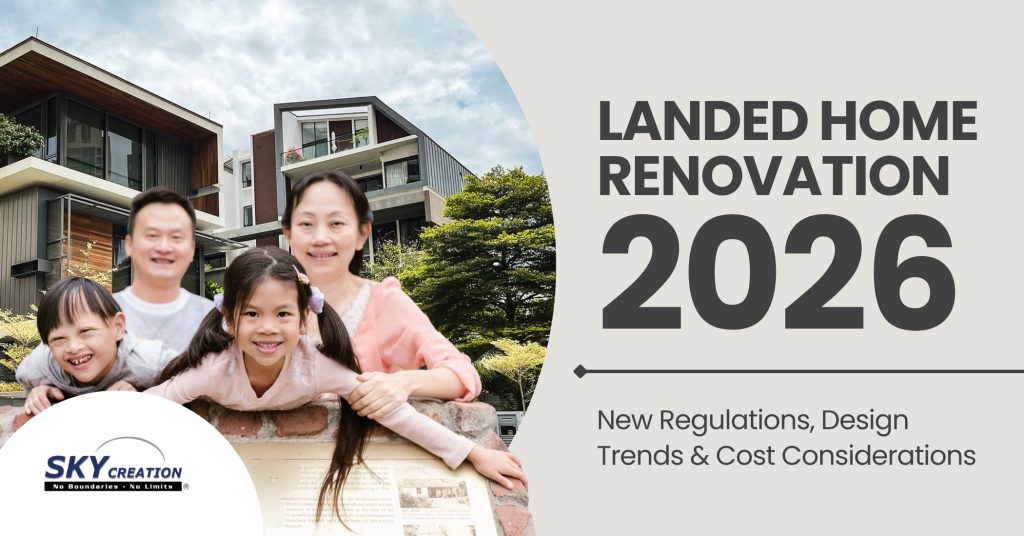
Renovating a landed home in Singapore is very different from renovating an apartment or HDB flat. The freedom is greater, but so are the responsibilities, risks, and long-term consequences.
In 2026, landed homeowners face a more complex renovation environment than ever before. Regulations are tighter, construction costs are higher, and expectations for comfort, sustainability, and multi-generational living have evolved.
Many homeowners start with excitement and big ideas. But halfway through the renovation, doubts appear:
- “Why didn’t we foresee this cost?”
- “We didn’t realise approvals would take this long.”
- “We focused too much on looks and not enough on living.”
This guide is written to help landed homeowners make informed, calm decisions — before renovation stress begins.
Why Landed Home Renovation Requires a Different Mindset
Unlike apartments, landed homes are not governed by a single management body. You are responsible for almost everything — structure, drainage, façade, roof, boundary walls, and often even public-facing elements.
This freedom can be empowering, but it also means:
- Higher renovation budgets
- Longer planning timelines
- Greater risk of costly mistakes
- More regulatory approvals
A successful landed renovation starts with realistic expectations, not ambitious drawings.
Key Regulatory Considerations for Landed Homes in 2026
Planning Approval Is Not Optional
Any structural changes, extensions, rebuilding, or façade alterations require proper approval from authorities. This includes:
- Changes to building height
- Rear or side extensions
- Roof modifications
- Boundary wall changes
Even internal structural works often require professional endorsement.
Singapore authorities place strong emphasis on safety, neighbourhood harmony, and long-term structural integrity. Homeowners should always refer to official guidelines before committing to design changes. A helpful reference is the government’s residential living guidance:
https://www.hdb.gov.sg/residential/living-in-an-hdb-flat
(While this focuses on HDB living, it reflects broader national safety and renovation principles.)
Neighbour Impact Matters More Than You Think
Noise, vibration, and site access issues are more closely monitored in landed areas. Complaints can halt work, delay schedules, and increase costs.
Proper planning, communication, and responsible site management are essential.
Design Trends That Matter for Landed Homes — Not Just What Looks Good
Trend 1: Multi-Generational Living
More families are renovating landed homes to accommodate:
- Elderly parents
- Adult children
- Live-in helpers
This affects:
- Bedroom placement
- Staircase safety
- Bathroom accessibility
- Privacy zoning
Designing for flexibility now prevents costly reconfiguration later.
Trend 2: Climate-Responsive Design
Singapore’s heat and humidity influence daily comfort more than design style.
Homeowners are prioritising:
- Cross-ventilation
- Shading strategies
- Roof insulation
- Heat-resistant materials
A beautiful house that traps heat quickly becomes uncomfortable and expensive to cool.
Trend 3: Functional Outdoor Spaces
Gardens, patios, and terraces are no longer decorative add-ons. They are used for:
- Family gatherings
- Quiet retreats
- Natural cooling
- Visual openness
However, outdoor spaces must be planned carefully to avoid drainage issues and excessive maintenance.
Understanding Landed Home Renovation Costs in 2026
Cost is one of the biggest shock points for landed homeowners.
Unlike apartments, landed renovation costs vary widely based on:
- Property age
- Structural condition
- Size of land and built-up area
- Scope of demolition
- Level of rebuilding
Common Cost Categories Homeowners Underestimate
- Structural strengthening
- Waterproofing
- Drainage upgrades
- Electrical rewiring
- Roof repairs or replacement
- Temporary works and safety measures
A renovation that looks “minor” on paper can escalate quickly once site conditions are uncovered.
Renovation Scope: Renovate, Extend, or Rebuild?
This is a critical decision that affects everything else.
Renovation
Best for:
- Structurally sound homes
- Limited layout changes
- Budget-conscious upgrades
Risk:
- Hidden structural issues
- Compromised long-term efficiency
Extension
Best for:
- Growing families
- Adding functional space
Risk:
- Complex approvals
- Integration challenges between old and new structures
Rebuild
Best for:
- Very old homes
- Long-term ownership plans
Risk:
- Highest upfront cost
- Longest timeline
There is no universal “best” option. The right choice depends on budget, timeline, and how long you intend to live in the home.
Common Landed Home Renovation Mistakes — And How to Avoid Them
| Problem / Feature | Why It Happens | Common Regret | How to Avoid |
|---|---|---|---|
| Budget overruns | Underestimating structural work | Project becomes stressful | Conduct thorough site assessment |
| Poor thermal comfort | Focus on appearance | Home feels hot | Design for ventilation and shading |
| Delayed approvals | Late submission planning | Renovation stalls | Engage professionals early |
| Maintenance-heavy design | Trend-driven choices | High upkeep costs | Choose durable materials |
| Poor space zoning | Over-prioritising openness | Lack of privacy | Plan clear functional zones |
| Noise complaints | Weak site control | Work stoppages | Proper construction management |
These are issues that often surface months after renovation starts — when changes are hardest to make.
Why Planning Comes Before Design
Many homeowners start by asking, “How do I want my house to look?”
A better starting question is:
“How do I want to live in this house every day?”
Planning should cover:
- Daily routines
- Family dynamics
- Long-term ageing needs
- Maintenance tolerance
- Energy usage
Design should serve these needs, not override them.
The Importance of Choosing the Right Renovation Partner
Landed home renovation requires coordination across many disciplines:
- Architecture
- Engineering
- Construction
- Interior planning
A fragmented approach increases risk. An integrated renovation partner helps ensure decisions are aligned from start to finish.
You can learn more about how comprehensive renovation planning is approached at
https://skycreation.com.sg/
Frequently Asked Questions
How long does a landed home renovation usually take?
Depending on scope, it can range from several months to over a year, including approvals.
Is it better to renovate or rebuild an old landed home?
It depends on structural condition, budget, and long-term plans. A professional assessment is essential.
Do all landed renovations need approval?
Most structural, façade, and extension works require formal approval.
Why are landed renovations more expensive than apartments?
More structure, more responsibility, and fewer shared systems increase complexity and cost.
Can I live in the house during renovation?
For major works, this is often impractical due to safety and comfort concerns.
What is the biggest regret landed homeowners have?
Not planning enough for long-term comfort and maintenance.
Taking the Next Step with Confidence
If you are planning a landed home renovation and want clarity before committing, speaking with an experienced renovation specialist can help you avoid costly missteps.
You may request a professional consultation here:
https://skycreation.com.sg/get-free-quote/
For direct discussion and quick guidance, you can also reach out via WhatsApp at:
https://wa.me/6589567691
A Thoughtful Renovation Is an Investment in Daily Life
A landed home is not just a property asset. It is where daily life unfolds — quietly, repeatedly, over many years.
When renovation decisions are made thoughtfully, the home supports your lifestyle instead of demanding constant adjustment. In 2026, the most successful landed renovations are not the most dramatic ones, but the ones that remain comfortable, practical, and satisfying long after the dust has settled.
Taking the time to plan properly now is the most valuable renovation decision you can make.