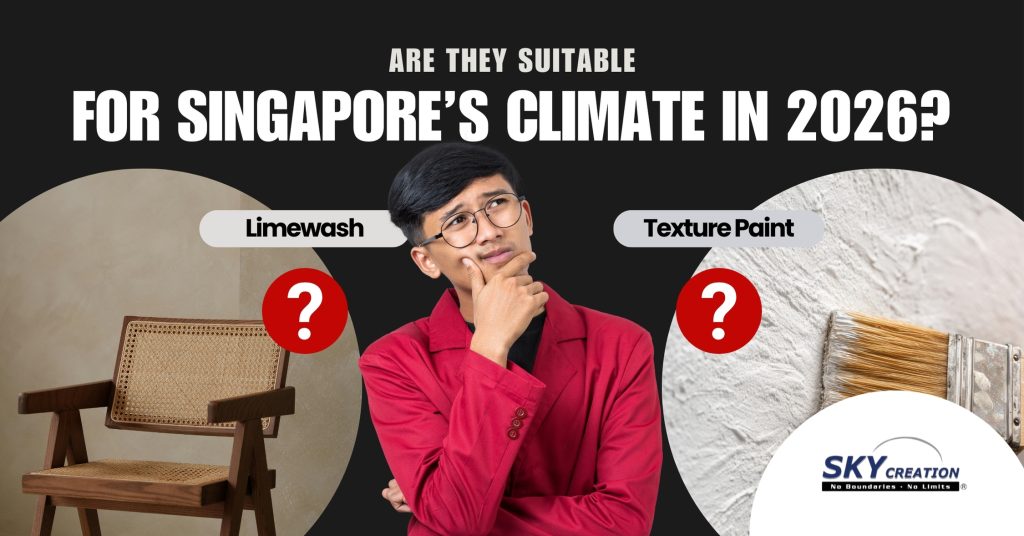
In 2026, wall finishes are no longer chosen purely for looks.
With Singapore’s high humidity, frequent rain cycles, and heavy air-conditioning use, the wrong paint choice can lead to mould, peeling, or constant touch-ups.
Two finishes dominate current design conversations:
- Limewash — soft, organic, and artisanal
- Texture paint — structured, tactile, and practical
But which one actually performs better in Singapore’s climate?
This guide breaks down appearance, performance, maintenance, cost, and long-term suitability, so homeowners can make a decision that lasts.
Check this out: Singapore Sustainability Living
Understanding Singapore’s Climate in 2026
Before comparing finishes, it’s important to understand the environment they must survive.
High Humidity & Condensation
Singapore’s year-round humidity creates moisture buildup inside walls, especially in air-conditioned homes.
Heat Cycles & Air-Conditioning
Daily temperature shifts (hot outdoors, cool indoors) cause wall expansion and contraction, stressing paint layers.
Mould & Peeling Risks
Poorly chosen wall finishes can trap moisture, leading to:
- Mould growth
- Bubbling or peeling paint
- Stains that reappear after cleaning
Climate compatibility is no longer optional — it’s essential.
What Is Limewash Paint?
What Limewash Actually Is
Limewash is a mineral-based paint made from limestone, traditionally used in Mediterranean and European architecture.
Visual Characteristics
- Soft, chalky appearance
- Natural colour variations
- Subtle movement as light changes
Why Limewash Is Trending in 2026
- Aligns with wabi-sabi, Japandi, and minimalist interiors
- Feels handcrafted and timeless
- Offers a non-synthetic, breathable finish
What Is Texture Paint?
What Texture Paint Is Made Of
Texture paint is typically acrylic-based, mixed with aggregates to create raised or patterned surfaces.
Common Texture Paint Finishes
- Sand or grain texture
- Trowel-applied patterns
- Subtle stucco-style finishes
Why Texture Paint Remains Popular
- Hides wall imperfections
- Durable and forgiving
- Works well in modern and contemporary homes
Limewash vs Texture Paint: Key Differences
| Feature | Limewash | Texture Paint |
|---|---|---|
| Finish Look | Soft, organic, natural | Structured, tactile |
| Breathability | Very high | Moderate |
| Moisture Tolerance | Good (on suitable walls) | Very good |
| Mould Resistance | Good if applied correctly | Generally stronger |
| Maintenance | Medium | Low |
| Touch-ups | Visible variation | Easier to blend |
| Design Style | Japandi, Wabi-sabi | Modern, Contemporary |
Climate Performance: Which Handles Singapore Better?
Breathability & Moisture Control
- Limewash allows walls to “breathe,” helping moisture escape
- Texture paint resists moisture penetration but is less breathable
Mould & Peeling Resistance
- Limewash performs well on dry, stable walls
- Texture paint is more forgiving on older or moisture-prone walls
Air-Conditioned Homes
In heavily air-conditioned homes, texture paint generally handles condensation stress better over time.
Maintenance & Durability Comparison
Cleaning & Touch-Ups
- Limewash cannot be scrubbed aggressively; touch-ups may show variation
- Texture paint is more tolerant of cleaning and repairs
Long-Term Ageing
- Limewash ages naturally, developing patina
- Texture paint maintains a more consistent appearance
Repainting Cycles
- Limewash may require more frequent refreshing
- Texture paint typically lasts longer before repainting
Cost Comparison in Singapore (2026)
| Wall Finish | Estimated Cost (SGD / sqm) | Notes |
|---|---|---|
| Limewash | $15 – $25 | Skilled application required |
| Texture Paint | $10 – $18 | More forgiving workmanship |
Costs vary depending on wall condition, prep work, and finish complexity.
Which Is Better for HDB Flats?
Limewash in HDBs
Best suited for:
- Newer flats with dry, stable walls
- Feature walls in living rooms or bedrooms
Less suitable for:
- Bathrooms
- Kitchens
- Older flats with moisture issues
Texture Paint in HDBs
Works well for:
- Older units
- High-use areas
- Homes prioritising durability over artisanal finishes
Which One Should You Choose?
Choose Limewash If You:
- Love natural, soft finishes
- Prefer subtle imperfections
- Have well-prepared, dry walls
- Accept higher maintenance for aesthetics
Choose Texture Paint If You:
- Want durability and ease of care
- Have older or imperfect walls
- Need better resistance to humidity
- Prefer consistent, structured finishes
When Neither Is Recommended
- Severely damp walls
- Active water seepage issues
- Areas requiring frequent washing
Renovate in a SAFE way: Green Renovation
Final Thoughts: Climate Suitability Comes First in 2026
In Singapore, the most beautiful wall finish is the one that lasts.
Limewash and texture paint both have a place in 2026 interiors — but only when chosen with:
- Climate realities
- Wall conditions
- Lifestyle needs
A design-led choice without technical understanding often becomes an expensive regret.
Frequently Asked Questions (FAQ)
Q: Is limewash suitable for Singapore’s humid climate?
A: Yes, limewash can work in Singapore when applied on dry, stable walls with proper preparation.
Q: Does limewash grow mould easily?
A: Limewash is naturally alkaline and resists mould, but poor wall conditions can still cause issues.
Q: Is texture paint better for humid environments?
A: Texture paint generally performs better in high humidity and is more forgiving on older walls.
Q: Which wall finish lasts longer in Singapore?
A: Texture paint typically lasts longer due to higher resistance to moisture and wear.
Q: Is limewash suitable for HDB flats?
A: Limewash is suitable for selected areas in HDB flats, especially living rooms and bedrooms.
Q: Is texture paint easy to maintain?
A: Yes. Texture paint is easy to clean and requires less frequent touch-ups.
Q: Can limewash be used in bathrooms?
A: Limewash is not recommended for bathrooms due to constant moisture exposure.
Q: Which is more expensive: limewash or texture paint?
A: Limewash generally costs more due to specialised materials and skilled application.
Q: Does texture paint crack over time?
A: Texture paint is durable and cracking usually occurs only with structural wall movement.
Q: Which wall finish is better for long-term resale?
A: Texture paint appeals to a broader market due to its durability and low maintenance.