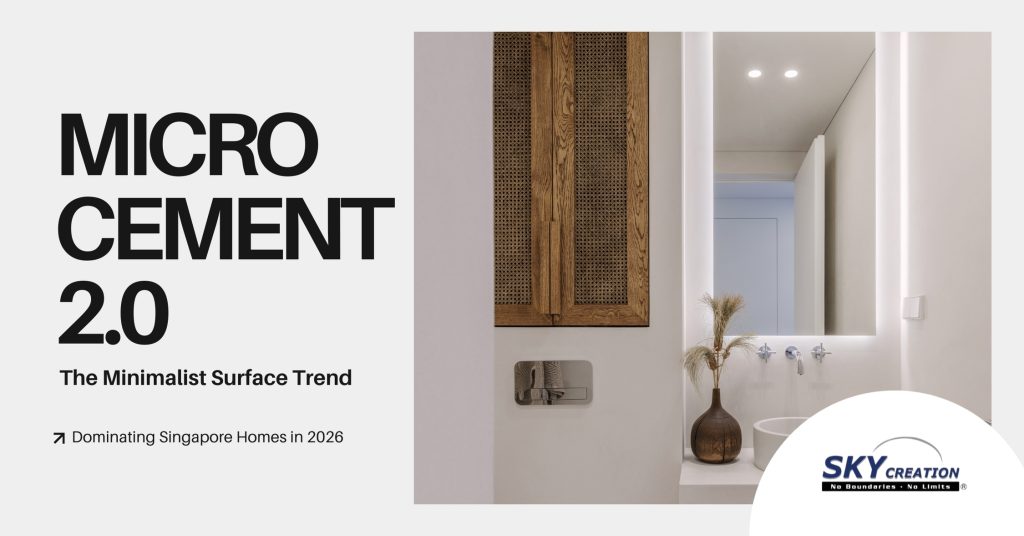
Minimalism in interior design has evolved. In 2026, homeowners are no longer chasing raw, unfinished looks — they want refined simplicity, durability, and surfaces that age well.
This evolution is what designers now call Microcement 2.0.
Unlike earlier versions that prioritised aesthetics over practicality, Microcement 2.0 represents a more mature, technically improved approach — making it one of the most talked-about surface finishes in Singapore homes today.
Why Microcement Is Evolving in 2026
Between 2020 and 2024, microcement gained popularity for its seamless, modern look. However, early adopters also experienced issues such as:
- Inconsistent finishing
- Slippery surfaces
- Poor sealing leading to stains or hairline cracks
By 2026, the industry has addressed these concerns with better systems, materials, and application standards — giving rise to Microcement 2.0.
What Is Microcement 2.0?
What Microcement Actually Is (Simple Explanation)
Microcement is a thin cement-based surface coating applied in layers over existing substrates such as tiles, screed, or walls. It creates a joint-free, continuous finish.
What Makes Microcement “2.0” Different
Microcement 2.0 improves on earlier versions through:
- Advanced sealers with higher water resistance
- Improved anti-slip finishes for wet areas
- Better colour consistency and layering control
- Stronger crack-resistance systems
- Higher workmanship standards
In short, it’s not just a trend — it’s a technical upgrade.
Why Microcement Fits Singapore Homes So Well
Seamless Look for Compact Spaces
In HDBs and condos where space is limited, removing grout lines visually enlarges rooms and creates flow.
Works with Singapore’s Humid Climate (When Done Right)
Properly sealed microcement resists moisture, mould, and stains — making it suitable for tropical conditions.
Minimalism Without Visual Clutter
Microcement supports modern, Japandi, and contemporary luxury interiors by acting as a calm, neutral base.
Where Microcement Is Used Most in 2026 Homes
Bathrooms
- Floors and walls
- Vanity backdrops
- Dry–wet area transitions
Kitchens
- Flooring
- Backsplashes
- Island bases
Living Rooms
- Seamless flooring for open-plan layouts
Feature Walls
- TV walls
- Entryway statement surfaces
Bedrooms & Studies
- Calm, hotel-like finishes
Microcement vs Tiles vs Other Surfaces
| Feature | Microcement | Tiles | Vinyl | Natural Stone |
|---|---|---|---|---|
| Seamless Look | Excellent | No | Moderate | No |
| Slip Resistance | Good (2.0 finish) | Good (anti-slip) | Moderate | Moderate |
| Maintenance | Low | Low–Medium | Low | High |
| Durability | High | Very High | Medium | High |
| Design Flexibility | High | Very High | Moderate | Low |
| Cost (2026) | Medium–High | Medium | Low | High |
Key takeaway:
Microcement is chosen for design cohesion and visual calm, not for being the cheapest option.
Cost of Microcement in Singapore (2026)
| Application | Estimated Cost (SGD / sqm) | Notes |
|---|---|---|
| Floors | $120 – $180 | Depends on substrate prep |
| Walls | $110 – $160 | Texture & colour affect cost |
| Bathrooms | $140 – $200 | Includes waterproofing layers |
| Feature walls | $150 – $220 | Detail & lighting matter |
Prices vary based on site condition, layering system, and workmanship quality.
Pros & Cons of Microcement (Realistic View)
Advantages
- Seamless, modern appearance
- Visually enlarges space
- Easy daily maintenance
- Customisable tones and textures
Limitations
- Requires skilled applicators
- Higher upfront cost than tiles
- Not ideal for poorly prepared substrates
Common Misconceptions
- ❌ “Microcement always cracks”
- ❌ “Microcement is slippery”
Both issues are workmanship-related, not inherent flaws of the material.
Is Microcement Slippery, Durable, or Hard to Maintain?
Slip Resistance
Microcement 2.0 uses anti-slip sealers, making it suitable for bathrooms when specified correctly.
Durability
When applied on a stable substrate, microcement is highly durable and resistant to daily wear.
Maintenance
- Regular sweeping/mopping
- Neutral cleaners only
- No special treatments required
How to Design Microcement So It Looks Premium (Not Flat)
- Use layered colour tones, not flat grey
- Pair with warm materials (wood, fabric, lighting)
- Introduce indirect lighting to add depth
- Avoid overusing microcement in every surface
Good design prevents microcement from feeling cold or unfinished.
Renovating HDB soon? You should check this out: Singapore HDB Renovation Guidelines
Is Microcement Suitable for HDB Flats?
Yes — with proper assessment.
Important Considerations
- Substrate stability
- Waterproofing in wet areas
- Noise and hacking regulations
- Correct layering thickness
When Microcement Is Not Recommended
- Severely uneven floors
- Structurally unstable substrates
- Ultra-low budgets expecting premium results
Final Thoughts: Why Microcement 2.0 Is More Than a Trend
Microcement 2.0 represents a shift toward intentional minimalism — where surfaces are calm, durable, and thoughtfully designed.
In 2026, it’s no longer about chasing trends, but about choosing materials that:
- Age well
- Feel timeless
- Support modern living
When designed and executed professionally, microcement becomes a long-term design investment, not a short-lived style choice.
Check out our portfolio: Our Projects
Frequently Asked Questions (FAQ)
Q: What is microcement 2.0?
A: Microcement 2.0 refers to improved microcement systems with better sealers, durability, slip resistance, and finishing quality.
Q: Is microcement suitable for Singapore’s humid climate?
A: Yes. When properly sealed, microcement performs well in humid environments like Singapore.
Q: Is microcement slippery in bathrooms?
A: Microcement 2.0 uses anti-slip finishes, making it suitable for bathroom use when specified correctly.
Q: How long does microcement last?
A: With proper application and maintenance, microcement can last many years without major issues.
Q: Is microcement more expensive than tiles?
A: Yes. Microcement generally costs more due to specialised materials and skilled workmanship.
Q: Can microcement be applied over existing tiles?
A: Yes, if the existing tiles are stable and properly prepared.
Q: Is microcement suitable for HDB flats?
A: Yes, provided HDB renovation guidelines and proper substrate preparation are followed.
Q: Does microcement crack over time?
A: Cracking is usually caused by poor substrate preparation, not the microcement itself.
Q: How do you clean and maintain microcement?
A: Regular sweeping and mopping with neutral cleaners is sufficient.
Q: Is microcement still trendy in 2026?
A: Yes. Microcement 2.0 focuses on durability and refinement, making it a lasting design choice rather than a passing trend.